Start here
Can you see real sumo in Kyoto?
Kyoto stages no Grand Sumo tournament, yet a 70-minute sumo show runs in Nakagyō Ward. What to expect, how it compares with a tournament, and who it suits.
Book the sumo show ↗Quick answer
Not as a tournament. Grand Sumo's six yearly tournaments are staged in Tokyo, Osaka, Nagoya and Fukuoka, never in Kyoto. What Kyoto offers is a 70-minute sumo show in Nakagyō Ward, where wrestlers demonstrate techniques, compete in live matches and, for a few selected guests, take on a volunteer in the ring. It is an informative, comic demonstration rather than a ranked bout, and it suits first-timers and families best.
The short answer
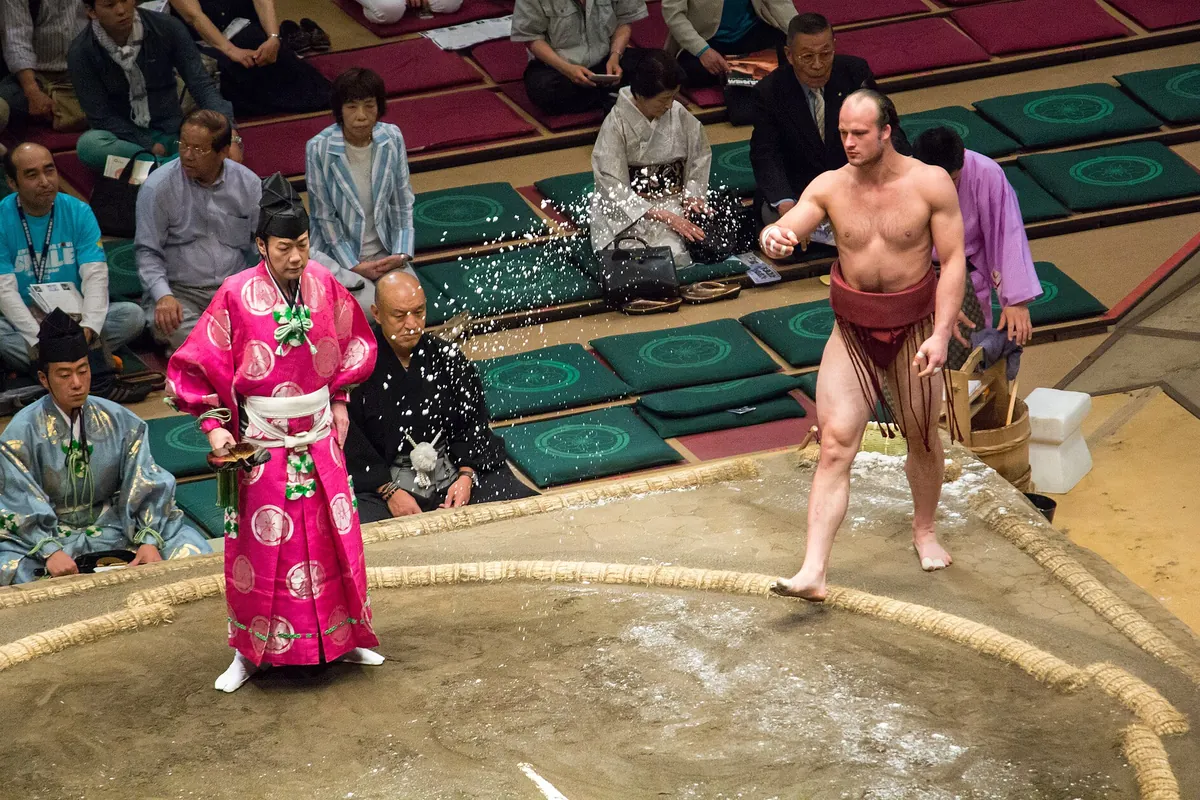
There is no ranked sumo in Kyoto, so a visitor cannot watch a Grand Sumo tournament here. The calendar, as Wikipedia sets out the Japan Sumo Association's schedule, gives Tokyo three, in January, May and September, and one apiece to Osaka in spring, Nagoya in summer and Fukuoka in autumn. What Kyoto does offer is the show this site covers: 70 minutes with an English-speaking host, wrestlers who demonstrate techniques and compete in live matches a few metres away, and a ring challenge for selected guests. Think of it as an introduction to the sport rather than the sport itself, and book it knowing that.
What a sumo show is
A sumo show keeps the building blocks of the sport and rearranges them for visitors. The ring and the rituals come from sumo itself: the clay platform, the thrown salt, the stamping, the charge. The pace does not. A tournament bout is decided in moments and counts towards a wrestler's ranking, while a show stops to explain, joke and pose for photos. The Nakagyō booking page promises that mix: an English-speaking host explaining the rules and customs, wrestlers demonstrating techniques and traditions, then live matches and a chance to meet the wrestlers. None of it needs background knowledge, which is the point.
What happens in the 70 minutes
The booking page lists a demonstration of sumo techniques and traditions, live matches, a chance for selected guests to challenge a wrestler, a meet-and-greet and photo opportunities. It gives no running order, and start times appear only on the calendar, so this site prints none. One recent reviewer on the page calls the session informative and full of comedy, and notes that it is not a serious bout. That is the register to expect: entertainment built on real technique, not a contest with something at stake.
Read next: The Kyoto sumo show, part by part
Why the tournaments are elsewhere
Kyoto was the seat of sumo's court tradition in the Heian period. Wikipedia traces the written term to sumai no sechi, a wrestling contest at the imperial court in the Heian period, and says Kyoto became the seat of the imperial court in 794. It adds that charity sumo on shrine grounds was common in Kyoto and Osaka in the Edo period. Today's professional calendar, though, is run by the Japan Sumo Association, which holds its tournaments in Tokyo, Osaka, Nagoya and Fukuoka. History links Kyoto to sumo; the modern schedule does not.
The ring
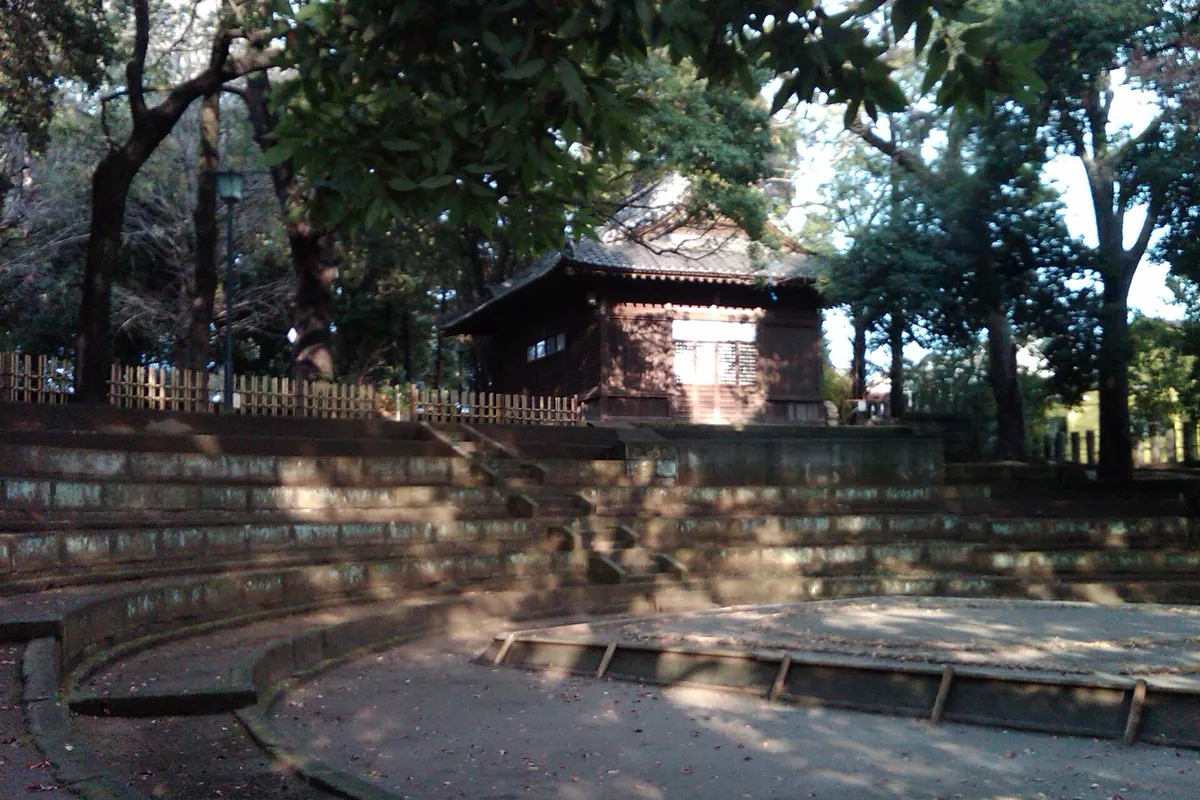
The dohyō is a raised clay platform carrying a circle of rice-straw bales about 4.55 metres across, says Wikipedia. Ring attendants called yobidashi build a new one before each Grand Tournament, a job that takes three days. The booking page does not describe the ring used in the Nakagyō show, so expect the idea rather than a replica. The rule it stands for never changes: leave the circle, or let anything but a sole touch the clay, and you have lost the bout.
Salt, stomp and charge
Three actions shape every sumo bout. Wrestlers throw handfuls of salt before entering the ring, a cleansing that Wikipedia links to Shinto. They lift a leg high and bring it down hard in the stomp called shiko, which the Wikipedia glossary describes as a training exercise that is also performed ritually before bouts to drive away demons. Then comes the tachiai, the opening charge, which Wikipedia says begins when both wrestlers touch their fists to the ring and rise together. A good host will point out each one as it happens.
How to follow a bout
A bout has a simple spine. Both wrestlers crouch at the two white lines in the middle of the ring, called shikiri-sen, then charge. The Japan Sumo Association recognises 82 winning techniques, the kimarite, according to Wikipedia, and the referee announces the one that decided the bout. He also shouts hakkeyoi during a stand-off, which the glossary renders as put some spirit into it, and nokotta, which tells the defender he is still in the ring. Learn those two words and the room makes more sense, whether you are watching a demonstration or a title match on television.
The referee and his fan
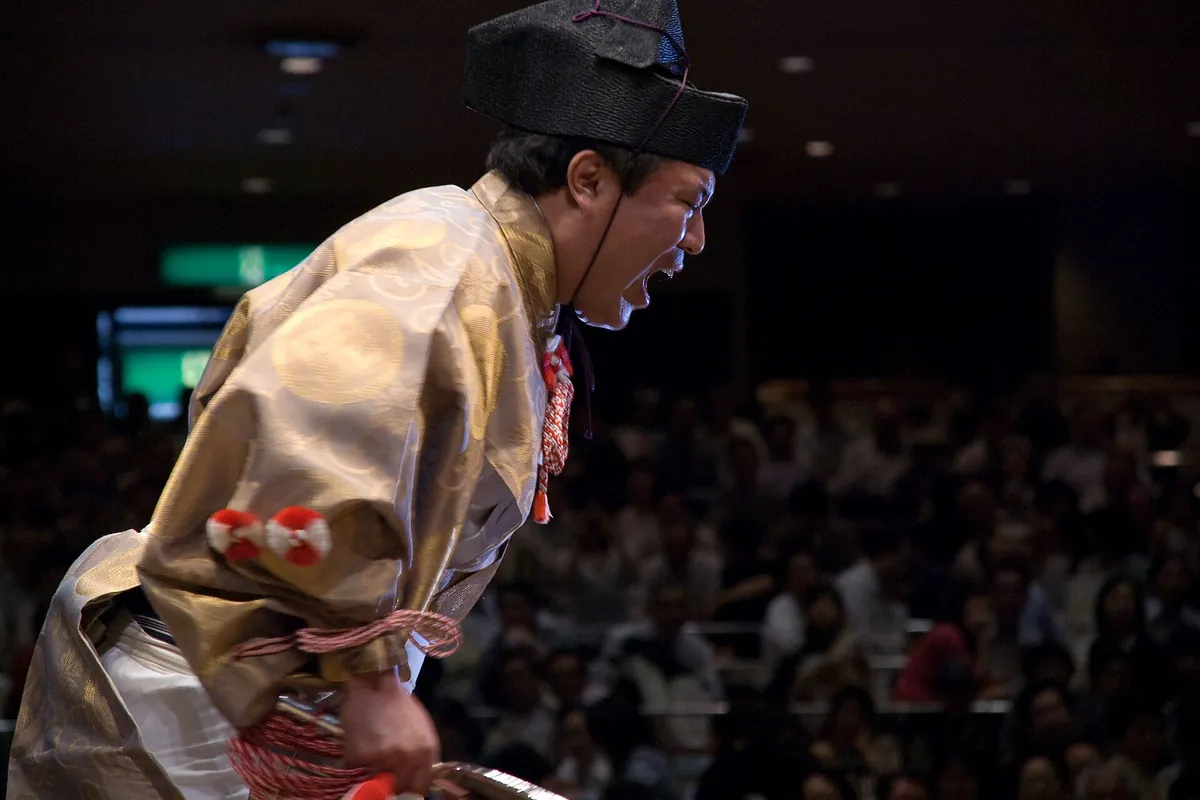
The gyōji referees each bout in ceremonial dress, with a lacquered black hat that Wikipedia says was inspired by courtiers' hats. He points a wooden war fan, the gunbai, towards the winner, and in professional sumo five judges can review his decision. Whether the show uses the same apparatus is not stated on the booking page. What you can rely on is the grammar: a caller, a charge, a winner, and a short explanation of why. Listen for the host naming the technique, because that is where a first-timer learns the most.
The ring challenge
The booking page says selected guests can be invited into the ring to take on a wrestler. It gives no rule for who is chosen or how many places exist, so do not plan around a turn. If you are picked, the page's one piece of advice applies: wear comfortable clothing suitable for physical activity. The page frames the moment as a chance to feel a wrestler's size and strength first-hand. If you would rather watch, the show is just as easy to enjoy from your seat. A second Kyoto event describes its own challenge differently, which the comparison guide on this site sets side by side.
Read next: Which Kyoto sumo show to book?
Other ways to see sumo
A show is one of three routes. A Grand Sumo tournament lasts 15 days, from one Sunday to the next, and is the only place to see ranked competition. A stable, or heya, is where most wrestlers live and train, says Wikipedia, and visits are a separate matter from a show. Then there are staged events like this one, built for visitors with no background. Each answers a different question: who wins, how do they live, and what is going on in the ring. Kyoto's show answers the third, and does it in English. Tournament tickets are sold through the association's English site, separately from any show booking.
Who should skip it
Skip it if you want ranked competition, a serious bout or a seated meal: the booking page describes none of them. Skip it if audience participation makes you uneasy, since selected guests are invited into the ring. And skip it if you need to know which ranks the wrestlers held or whether they are active, because the page does not say. For those questions, a tournament in Tokyo, Osaka, Nagoya or Fukuoka, or a stable visit arranged separately, is the better answer.
Where to meet
The booking page gives the meeting point in Japanese: Shimizu-chō 359, north of Nijō, in Nakagyō Ward, and says to meet on the basement level. Nakagyō is one of Kyoto's eleven wards, says Wikipedia, and its main income comes from tourism, shopping and entertainment. The same article notes that streets in the central wards still follow the grid of the original city and are known by name. The page names no station, so work from the address and the map link in your confirmation, and allow some slack to find the right door.
Who it suits, and how to book
It suits first-timers, families with children of any age, and travellers with one free evening in Kyoto who want to understand what they have seen on television. No knowledge of sumo is needed, says the booking page. Pick a date on the calendar, where the price shows in your currency, and note that free cancellation applies up to 24 hours ahead for tickets booked through GetYourGuide. The meeting point is in Nakagyō Ward, on the basement level, and the address on your confirmation is in Japanese, so keep it ready for a map app.
Read next: Nakagyō after the sumo show
Frequently asked questions
Can you see real sumo in Kyoto?
Not a tournament. Grand Sumo is staged in Tokyo, Osaka, Nagoya and Fukuoka. Kyoto has a 70-minute sumo show with wrestlers, an English-speaking host, live matches and a ring challenge for selected guests.
Is the Kyoto sumo show a real bout?
It is a demonstration with live matches. A recent reviewer on the booking page calls it informative and funny and says it is not a serious bout, so expect entertainment built on real technique.
Do I need to know anything about sumo?
No. The booking page says no previous knowledge is needed, and an English-speaking host explains the rules and customs as the show goes on.
Can I enter the ring myself?
Only selected guests have the chance, per the booking page, which gives no rule for the choice. Do not plan around a turn. Clothing should be comfortable and suited to physical activity.
Is the show suitable for children?
The booking page calls the show suitable for all ages and says no sumo knowledge is needed.
Where are the real tournaments held?
Three in Tokyo, in January, May and September, then one each in Osaka in spring, Nagoya in summer and Fukuoka in autumn. Each lasts 15 days.
Sources